Showing posts with label Traveling. Show all posts

Thursday, August 1, 2019

The Journey Home And Beyond


Our kiwisforthesummer2019 Iwi
Kia Ora.  Having been immersed in Kiwi and Maori culture for the past five weeks will now make the journey back to American culture (another adventure).  Our students will take with them lasting memories of the challenges and opportunities of what not only New Zealand faces, but what the rest of the world faces as well. Preserving biological diversity, conserving resources, and maintaining a balance between natural and human built environments are key to a sustainable future.  And, it will take all of us with our diverse backgrounds to come together in many different ways to help make lasting change for a bright future. 

Dear students, we hope that what you have experienced with us in New Zealand will help shape the decisions you make for our future in exciting and positive ways.  We thank you for giving of yourselves openly with your hearts and minds so that our time together could be such a special learning opportunity for us all.  We have really enjoyed being with all of you, touring the wop-wops, and sharing a daily cuppa. Sweet As!

From the land of the long white cloud, safe and happy travels!  See you in the land of the flowers (La Florida).  With a Hongi and hug to each of you, Mark, Meryl, Jámm, and Tupelo

They Are On Their Way


There is fresh snow on the Southern Alps.  Lambing season continues. And after a last pie at Hillyers, we were off to the airport. Most of our students are on their way back to the States.  One is staying on in NZ to do a bit more exploring and two are off to Australia!
We miss you all already and wish you safe travels home. m&m 


Sunday, July 28, 2019

Saturday, July 27 - Here Comes the Sun


On the last day of our overnight trip, we woke up to the sound of “Here Comes the Sun” in the Marae meeting house, or Wharenui, to see that the fog had lifted. We had slept under the sacred and spiritual carvings of ancient Maori stories and gods that lined the inside of the Wharenui, through which Maori ancestors had filled our heads with many colorful dreams, and even some prophetic ones. After a short breakfast at the Maori Wharekai (dining room), we put everything back the way it was and headed out.

A fierce tribe performing a haka outside of the Wharenui

At this point in the day, seven of the group split off to go whale-watching while the rest went on the Kaikoura Peninsula Walkway to have a fun walk up to the Huttons Shearwater predator proof area. The whale-watchers took a bus to South Bay on the west side of the Kaikoura Peninsula, where we got on a boat that took us Southwest along the Eastern coast. Whales are a very important part of Maori culture, particularly the southern right whale or Tohora, the whale that Paikea rode in the Maori Whale Rider legend that was later made into a movie. Where we were, there were mainly sperm whales, however, we were lucky enough to see a sei whale shortly after our journey started. Sei whales are the third largest whale species, after the blue whale and the fin whale. After this sighting, the crew was on the hunt for sperm whales for the rest of the day, while our host educated us. Sperm whales are the largest predatory animal in existence, reaching lengths of up to 20.5 meters and weighing up to 65 tons. They prey on large squid (such as the giant squid), octopus, sharks and other large fish, but their diet consists mainly of arrow squid. They will dive as deep as 3000 meters, and when hunting they will let out a call at 238 decibels, 34 decibels louder than a NASA space launch, that will stun and sometimes even kill their prey. Today we saw three sperm whales, all males, each with names the crew had given them. We also saw two New Zealand fur seals and several albatrosses and giant petrels. The most notable of the sperm whales was Tiaki (Maori for “protector”), a very large male that seems to have taken up protecting the other whales in the area, and our host’s favorite of the lot.

On the top deck looking out at the East coast

Watching Tiaki surface

Tiaki surfacing with an albatross overhead

A diving sperm whale

The peninsula-walkers left from Point Kean and took the Peninsula Walkway along the hillsides facing the ocean and the rocky sea floor that had risen 4 meters out of the water. There they got to experience the twisted limestone on the rocky coastline and spectacular panoramic views of the Pacific.

The Huttons Shearwater predator proof area on the Kaikoura Peninsula Walkway

Everyone regrouped for lunch at the world-famous Kaikoura Seafood BBQ, where we ate a variety of seafood delicacies, such as crayfish and whitebait fritters, prawns, and salmon steak.

Reunited at the Kaikoura Seafood BBQ

Finally, after a long three days at Waipara and Kaikoura, we headed back to Christchurch, with the uneasy feeling that the end of our trip was approaching more rapidly than we would like.
-Dylan

Saturday, July 27, 2019

Friday,, July 26 - On the road to Kaikoura


We awoke from the Waipara Sleepers to gather our things, eat breakfast, and clean up before heading out in the Gator Waka for Kaikoura.

The group huddles together for warmth while waiting to enter the Waka


We made a stop along the way to Kaikoura at Cheviot for morning tea time. After tea time, we continued along, passing many farmlands and hills with sadly very little native vegetation (although the hills looked like they were draped in green velvet in the sun - editors m&m).
  
We saw the Kaikoura mountain range on our way to Kaikoura

We were able to see the Kaikoura mountain range from far away, which was neat, but we didn't actually see it while we were there because of all the fog that rolled in and stayed strong day. Some background context for the Kaikoura mountain range: the Kaikoura mountain range is the northeastern most part of the Alps mountain range on the South Island, with the city of Kaikoura, which lies near a fault zone, about a 3-hour drive from our Lincoln Dormitory rooms.

Knowing that the city of Kaikoura is close to a fault zone is key information for understanding that a major earthquake (7 on the Richter scale) hit Kaikoura four years ago, which has had lasting impacts that could be seen as we drove in and around Kaikoura. Once we got to Kaikoura, we stopped for a restroom break before heading north through the Hikurangi Marine Reserve, a road very close to the rocky coast that is undergoing some serious construction because of the damage that falling rocks from the earthquake did to the road.

We saw lots of construction in and around roads to Kaikoura


Although it took extra time to get through the construction, we did make it to Ohau point where we saw a large colony of New Zealand fur seals before eating some lunch in a newly reconstructed car park.

We saw many fur seals at Ohau point

This fur seal in particular was the biggest we saw at Ohau point


After lunch at Ohau point we then headed back south to Point Kean in Kaikoura where we saw more fur seals, native vegetation, and a rocky zone that had previously been sea floor but was uplifted by 4 meters to what you see in the pictures below. Also shown in the pictures below is a fur seal taking a nap amongst the vegetation with the group in the background.
Uplifted rock that was previously sea floor at Point Kean

Fur seal napping in front of group at Point Kean


In previous years sea stars and sea anemones have been found, but this year that wasn’t the case. Instead, we saw some brown algae and a few different birds, including black-backed gulls, oystercatchers, and shags.

Oystercatchers searching for food at Point Kean

 
Right as we were about to leave, we ended up meeting Brett, a department of conservation person as well as a Maori member of the Takahanga Marae (Maori meeting house) that we would be staying in later on. He told us that unfortunately he couldn’t be with us at the Marae tonight as he had a public event to partake in but he did tell us about the process at the Marae and did a hongi (Maori greeting: a “sharing of breath”) with us before we departed for the Marae.

Brett talking to the group at Point Kean


When we got to the Marae, they didn’t have the formal (powwhiri) welcoming ceremony like we were expecting (usually there is a male and a female speaker of the Maori, and the female will call out to the female “chief” of our group who responds back, and the Maori decide if we are friend or foe and act accordingly) because many Maori of the Marae were either sick or obligated with tasks elsewhere (like Brett and some others that were in different parts of the country), but there was a male speaker to welcome us with the informal welcome who welcomed us with a traditional speech in Maori (letting us know of his homeplace, mountain, etc), and the Maori sang a song for us, to which we sang one back ( “Sweet Caroline”) after our Chief, Mark, let the welcomers know if our mountain and place from which we come. After that, we shared kai (food) with them (a tradition that shows we are now all equals and share the space as friends), and then one of the Maori told us the stories behind the wood-carved panels in the special room we would be staying in (even more special because the Maori told us that at night the knowledge of the Maori ancestors will flow into our minds while we sleep). No photos were allowed to be taken in the Marae since it is the Maori sacred ground, but here is a picture of the outside of the Marae.

The outside of the Marae that we stayed at for the night

After the Marae, we went to get dinner at an Indian restaurant in Kaikoura (which was quite tasty) before heading back to the Marae to rest up for the night. Tomorrow some of the group will go whale watching in Kaikoura while others go for a short hike, before all of us head back together to Lincoln.
-Chris

Thursday, July 25 -Sheep, Greening Waipara, and Lip Sync

The start of our three day and two night trip was in full sun and pretty warm. Our first stop in the gatorwakawa was a green development called Pegasus. Here, we explored some for the pluses (rain gardens and swales, dark-sky lighting, and use of native plants) and minuses (used a lot of exotic plants) that the developer helped to set up. At the back of the development, there was some conserved open space where they are just beginning to restore with native plantings.

At the beach near Pegasus development
After tea time at Pukeko Junction, we explored the Greening Waipara project across many wineries and within the community of Waipara. The wineries incorporated biodiversity trails and planted natives within the planted vines. The idea is to provide habitat for insect predators that would eat the pests of the vines. Also - the biodiversity trails allow people to experience a little bit of their natural heritage while sipping their wine. We met with Daryl Harris, the local champion of the project and 4th generation rancher in the area. Daryl is a strong supporter of the project and has planted thousands of native plants in the area. He also uses his sheep to graze within the vineyards to keep weeds down.

Colin at Pegasus Bay Winery and the biodiversity trail
A longfin eel was sighted in the pond
Daryl explaining hos philosophy of pesticide reduction and planting natives

Daryl's Bear (the sheepdog) herding merino sheep


Daryl sorting out the sheep
We placed our belongings at the Sleeper Cars Backpackers at Waipara. We then went over to Daryl's for a home cooked meal of lamb, beef, roasted veggies and pavlova for dessert. Incredible! Then we had our traditional lip sync contest - much fun all around. Even had several games of the card game mafia. After dinner, had a cooold night in the sleeper cars


Night night. Dr H

Wednesday, July 24, 2019

Placeholder, July 25-27, 2019

Hi All,  We are on the road again - heading north to Waipara and then on to Kaikoura.  Again, internet will be spotty at best so we will fill you in when we get back.  m&m : )

Tuesday, July 23, 2019

Pingouins en Kayaks

Today we journeyed back to Akaroa, one of the first places we went to on this trip. We stopped for a quick tea time at Little River and made our way to meet up with the Pohatu Penguin Conservation group. Pohatu Penguin focuses on the conservation of the Little Penguin, with many threats to combat such as exotic mammalian predators, invasive plants taking over such as gorse, and habitat loss. Started 30 years ago by Shireen and Francis Helps, they have focused on boosting the population of the Pohatu colony. Kevin and Ben would be our tour guides for the day, greeting us with their friendly faces and French accents. We made the drive to Flea Bay where the real fun would begin. Even though the name sounds hostile, the origin story explains the truth. When settlers first arrived at Flea Bay, it was during the summer which is molting season for the Little Penguins. They shed their old feathers, a process which takes about 2 weeks, in order to have fresh feathers that are more waterproof and durable. During this, the infamous sand fleas of New Zealand take advantage of the penguins long stay on land and show up in hordes. Thankfully we are here in the winter and did not have any visits from sand fleas.
Our new friends!
We were immediately greeted by 3 residents of the area and even had the chance to feed our new friends. After a quick lunch, we began to prepare for our sea kayaking excursion. Equipped with wet suit skirts, lifejackets and paddles, everyone paired up and made the trek to the bay side. Kevin and Ben gave us a safety briefing which included how to paddle, what to do if our boats tip over, and what to do in case both Kevin and Ben are lost at sea. With most of us taking our shoes off and losing feeling in them almost instantly, we sent the kayaks off into the bay. We did our best to keep our distance from each other but also stick close to Ben as he talked to the group about the penguins and fur seals of the area. We were lucky enough to see a pair of penguins up on a cliffs edge, as well as fur seals, a few pied shags, and a giant petrel flew right by us a couple of times. We toured around the cove, hearing about the success story of this Little Penguin colony. 7 years ago there were only about 300 breeding pairs and as of 2016 there are at least 1100 breeding pairs in this colony. With traps put out around the bay in hopes of catching rats, possums or mustelids, the penguins have had a much better chance of survival with the lower number of predators.
Everyone preparing for the cold water

Action shot of the group
We got to see paua shells on the beach!
After the 2 hour tour, we head back inland for the opportunity to see one of the penguins up close. The area has 400 small boxes all over for the penguins to nest in for they prefer to be in dark places such as cliff sides, burrows that they sometimes dig, tool sheds and boxes like the ones they have out. Little Penguins are territorial and need at least 10 meters (about 30 feet) away from one another, so the boxes have been placed accordingly. With cameras ready, Kevin lifted the lid off of the female Little Penguins box and we got about 15 seconds to marvel at her. 

Little Penguin up close

Heading back to Akaroa and bidding Kevin and Ben goodbye, we stopped at the Bach café for an afternoon tea time before making the journey back to Lincoln.

With today being a true outdoorsy adventure, tomorrow we should be having a more mellow and artistic experience.
-Grace

Sunday, July 21, 2019

July 19-21, 2019: Free Weekend!

We are all back from our three-day free weekend.  Despite some yucky weather here and there, we all had some wonderful time off to explore and relax.

In Queenstown and Milford Sound...
-Bauer
-Chris
-Dylan
-Joe
-Lexie
-Maryanna
-Tess
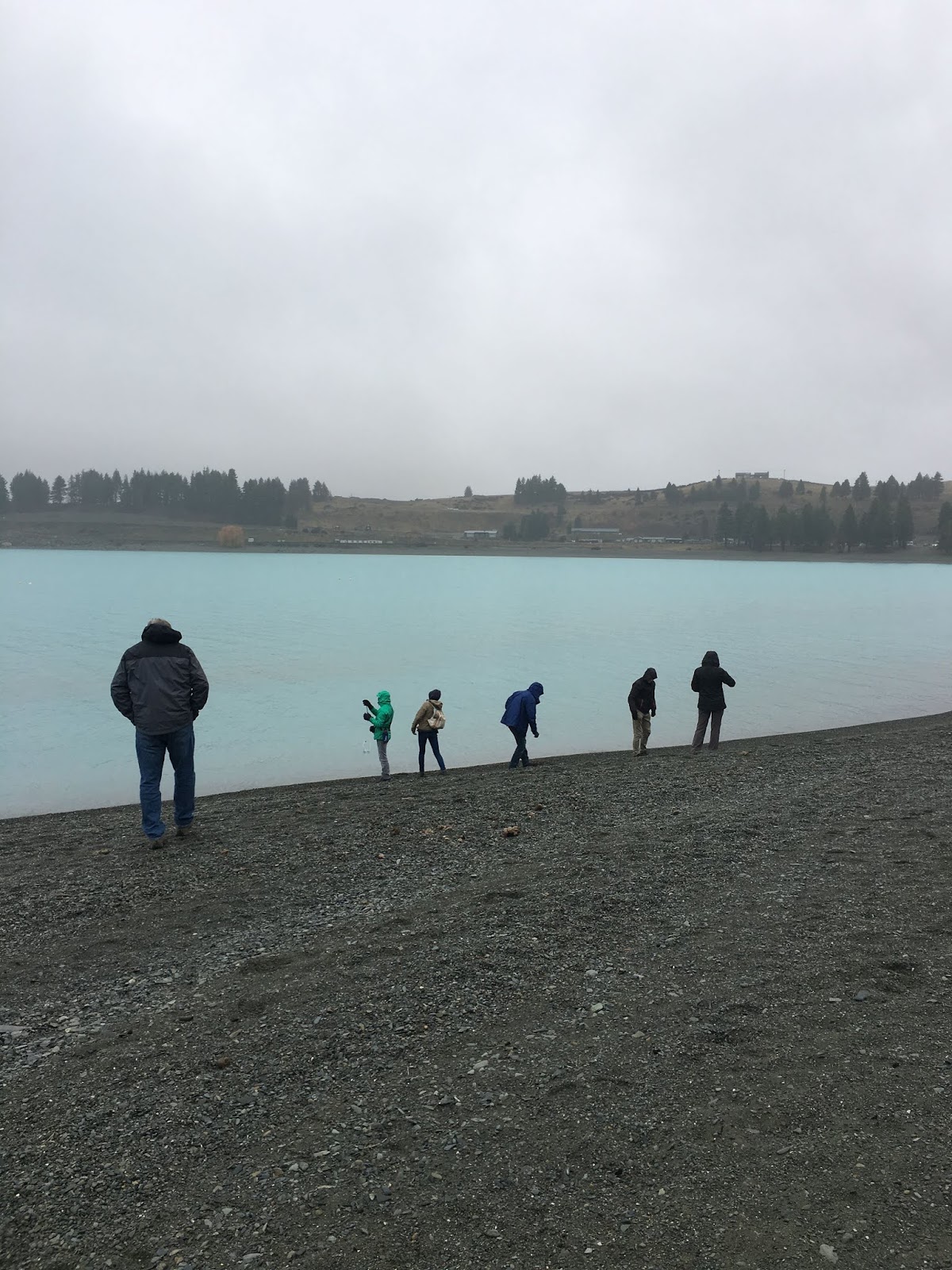
At Lake Tekapo...
-Mark and Meryl
Sweet Dreams Everyone! m&m : )